Trump, Senate GOP agree on frame of fast-track spending bill
Published in Political News
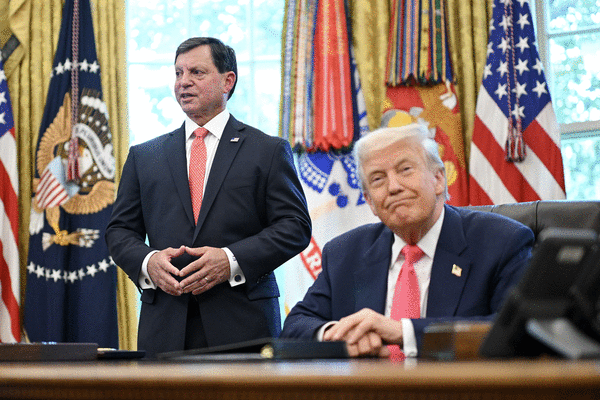
WASHINGTON — President Donald Trump and top Senate Republicans agreed Friday to the outline of a partisan fast-track spending bill aimed at bypassing minority Democrats and focused on providing funding for immigration enforcement and the U.S. Border Patrol.
The president and party leaders are pushing back against efforts by some rank-and-file GOP lawmakers to include new tax cuts and additional rollbacks in health care and other entitlement programs in this year’s package.
The GOP strategy instead appears to call for mostly limiting the fast-track package to Homeland Security-related provisions and passing it through Congress by June.
“I am calling for the Bill to be done no later than June 1st, and on my desk,” Trump said in a social media post after meeting with John Barrasso, the No. 2 Senate Republican, and Sen. Lindsey Graham. “The Department cannot wait any longer for full funding.”
Barrasso called the meeting “productive” and the goal is to get a “focused reconciliation bill that funds ICE and Border Patrol” to Trump’s desk by his deadline.
The bill’s funding would cover the remaining three years of Trump’s term and would first go through the Senate, Graham told Fox News host Bret Baier later Friday.
“I told President Trump: We’re going to deliver, we’re going to give you the money you need to run the Border Patrol and ICE for the rest of your presidency, without one Democratic vote,” Graham said.
Republicans plan to make use of the same special procedural maneuver they used last year to overcome solid Democratic opposition to Trump’s signature tax and spending legislation.
The effort comes after Republicans were unable to reach an agreement with Democrats to fund all Homeland Security operations through Sept. 30. Democrats are demanding limits to immigration enforcement tactics, including stopping the use of masks by agents and requiring judicial warrants.
The department has been stuck in the longest partial U.S. government shutdown in history. Still, the president has issued a legally controversial order to pay all employees anyway, allowing most operations to resume to normal levels.
If Republicans move ahead with a DHS-only bill, that would leave other spending plans, including a possible Iran war emergency funding bill, until later in the year.
This limited focus could ease the often arduous task of getting all factions of the Senate GOP majority on board with a bill.
It is not yet clear if House Republicans will unite behind this approach. The ultra-conservative House Freedom Caucus could pose a problem for Trump if the DHS funding isn’t offset by spending cuts to reduce the effect on the budget deficit.
House Budget Committee Chairman Jodey Arrington has talked of going after health care “fraud” in order to cut spending totals as part of the coming reconciliation bill. He has also signaled that campaign could wait for a second bill later in the year.
The partisan budget would only need 50 votes in the Senate rather than the usual 60 votes required, as long as it complies with a strict set of procedural rules. Speaker Mike Johnson has little room for error and must corral nearly all of his 217 House Republicans to pass the legislation.
The Senate is scheduled to work on the plan next week. First a new budget outline must pass both chambers and then a follow-up “reconciliation bill” adhering to instructions in the budget must also pass for the measure to become law.
©2026 Bloomberg L.P. Visit bloomberg.com. Distributed by Tribune Content Agency, LLC.



















































Comments