Trump trio making Michigan, Ohio auto stops as climate rollback looms
Published in Business News
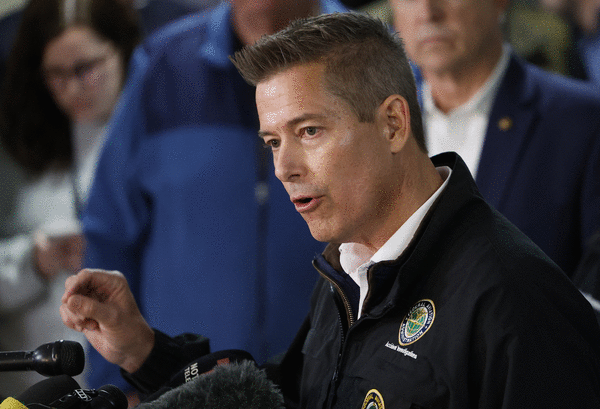
WASHINGTON — Three key cabinet officials are using visits to Michigan and Ohio to tout Trump administration policies they say are boosting the auto industry and U.S. manufacturing.
The officials are Transportation Sec. Sean Duffy, Environmental Protection Agency Administrator Lee Zeldin and U.S. Trade Representative Jamieson Greer. Their agencies have tremendous influence over the main federal policy areas — environmental, safety and trade — that impact Michigan's signature sector.
The trio stopped Friday at Ford Motor Co.'s Ohio Assembly Plant near Cleveland and were scheduled in the afternoon to visit Stellantis NV's Toledo Assembly Complex before attending the Detroit Auto Show on Saturday.
The visits come amid intensifying conversations over potential adjustments to the United States-Mexico-Canada free trade accord, which is of keen interest to the auto industry, and speculation that Trump officials could take action within days to nix the final remaining U.S. regulations on vehicle tailpipe emissions. The administration also has proposed a reduction in Corporate Average Fuel Economy standards, following a move last year to zero out noncompliance fines.
"The liberals, the Democrats wanted to have a transition to electric vehicles, which was driving up the cost of gas-powered autos, and the American people were paying the price," Duffy said Friday at Ohio Assembly in a video clip posted on X by CNBC. "We are taking that standard, the CAFE standard, from almost 60 miles a gallon back down to a more reasonable standard of 35 miles a gallon. What that's going to mean is at least $1,000 in a price cut for those who are buying vehicles in America."
Zeldin's EPA promised last year to roll back Biden-era rules that set aggressive greenhouse gas reduction targets for vehicles and proposed revoking an Obama-era legal finding that allowed such regulations in the first place.
“With this proposal, the Trump EPA is proposing to end sixteen years of uncertainty for automakers and American consumers,” Zeldin said in a July press release. He added that the past Obama and Biden administrations "twisted the law" and "warped science to achieve their preferred ends," resulting in high costs for families.
Automakers have been wary of such a move, praising regulatory relief but suggesting that enforceable rules of some kind remain in place. The Alliance for Automotive Innovation, the industry's top lobbying group in Washington, has taken a middling tack on the issue.
"We have been pretty clear that the Biden-era emissions rules, given current market dynamics, were simply not achievable, and we think it is good that the agency reassess that and set a new set of rules going forward," the group's CEO John Bozzella said in a Thursday interview at the Detroit Auto Show.
"That's really what we've focused on, is getting the balance right and making sure that we continue to support emissions reductions, and doing so in a way that's aligned with customer wants and needs now and in the future. So that's been the total focus of our engagement with the regulators," he added.
The transportation sector, mostly due to consumer vehicles, is the United States' leading direct source of climate-alterinT greenhouse gas emissions.
The previous administration, Duffy said in December, "illegally twisted mileage standards to create an electric vehicle mandate — jacking up car prices for American families and forcing manufacturers to produce vehicles no one wanted."
The Department of Transportation has estimated that the proposed rules would save families more than $900 off the average cost of a new vehicle and reduce roadway fatalities by helping Americans buy new, safer cars. The agency also underscored its message ahead of the Duffy visit by highlighting recent writedowns, business losses and reversals by the Detroit Three automakers— which also includes General Motors Co. — related to EV investments.
Environmental groups have countered the Trump administration's affordability argument by suggesting that additional consumer spending on gas under a lax regulatory regime would eclipse any savings.
"Drivers will be paying hundreds of dollars more at the pump every year if these rules are put in place," said Kathy Harris, director for clean vehicles at the Natural Resources Defense Council, after DOT announced its latest CAFE proposal.
She added: "That’s only good news for Big Oil, which has been given handouts time and time again by this administration."
(Staff Writer Breana Noble contributed.)
©2026 www.detroitnews.com. Visit at detroitnews.com. Distributed by Tribune Content Agency, LLC.








Comments