When a mare comes calling — in the dining room of a nursing home
Published in Senior Living Features
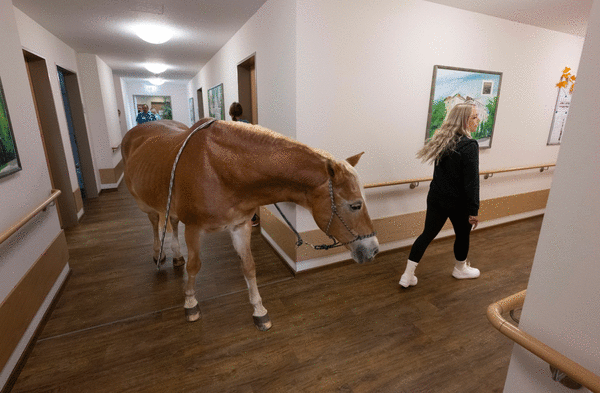
FRANKFURT, Germany — Wega carefully places her hooves on the dark laminate floor. Step by step, the small-statured Haflinger mare ventures into the foyer of the nursing home in Bückeburg in Lower Saxony, Germany.
The clacking of the horseshoes draws the first curious glances. "Come closer, she's very careful," calls out Nele Plassmeier to the still somewhat reserved residents as she leads her horse loosely by the rope.
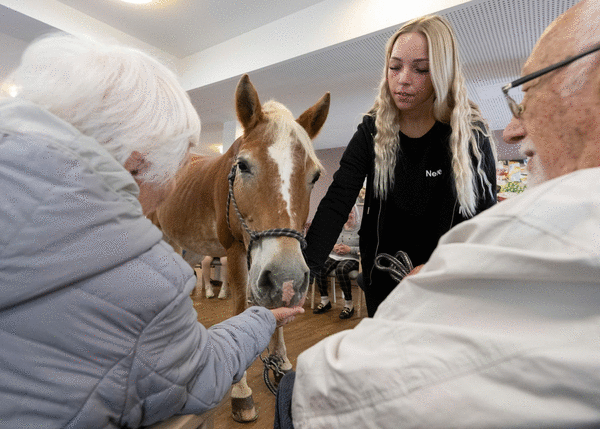
The invitation is effective. Several women in wheelchairs follow the horse toward the dining room. In the area where residents of the Hyggegarten nursing home usually eat together, staff have already pushed the tables aside to make room for the unusual visitor.
Around 20 men and women sit in a circle, waiting for Wega’s arrival. Many appear physically frail. Some struggle to speak, live with dementia or rely permanently on wheelchairs.
"Since our residents have known that Wega is coming to visit again, you can really tell they are looking forward to it," says Tanja Schal, head of social services at the care home. "The horse simply radiates a calm that is immediately transferred to the people. It's wonderful to see."
The bay mare looks around curiously, flares her nostrils and sniffs out the unfamiliar surroundings, even from her perspective.
"She recognizes exactly that she has to move slowly and carefully here - but we've practised that," says 23-year-old horse owner Plassmeier.
"It's just so nice. I grew up in the village and there were horses everywhere," says a woman, beaming as she strokes Wegas' neck with a shaky hand.
"This is something really great for us here," comments a man in a wheelchair after he has groomed the horse's flank with a brush for several minutes.
One by one, Plassmeier directs the horse around the room. Nobody backs away from the large animal. Wega is repeatedly given treats and stroked.
After a good 45 minutes, it's over and Wega is slowly led towards the exit. On the street, she climbs into her trailer without hesitation.
"I make sure it's not stressful for the horse either," says Plassmeier.
Care homes across Germany increasingly use animals - often ponies - to support residents' well-being.
Animal-assisted therapy is a growing field, with dogs and horses most commonly involved.
According to the Science Direct Journal, "Animal assisted intervention has the potential to improve the quality of life in the elderly."
"There are many clinical studies in the literature reporting that animals reduce the feelings of solitude and anxiety of older adults, encourage social interaction, make their lives more active, and increase their quality of life," the journal reports.
But there are also several unconventional species that have also been involved.
A study published by the US National Library of Medicine (NLM) names the use of other species such as guinea pigs, rabbits, various farm animals, alpacas, donkeys, reptiles, aquarium fishes and dolphins.
However, far less is known about how these activities affect the animals themselves.
A review published by the NLM of 135 studies found that research overwhelmingly focuses on the benefits for humans, which are generally positive, while data on animal stress or welfare is scarce.
Animal welfare associations generally view therapy visits positively, noting that physical contact with animals can have a calming and uplifting effect.
At the same time, the organizations stress that animal welfare must come first: if an animal shows signs of stress, a visit should be cut short.
Meanwhile, back in Germany, Plassmeier, who is a prospective teacher from the neighbouring North Rhine-Westphalia state, hopes to further develop Wega's role as a therapeutic animal.
She plans to return to university to study special needs education and eventually professionalize her work. She earns no money from her and Wega's nursing home visits.
"Seeing people laugh," she says, gently stroking her horse's head, "that's the best reward I could ask for."







Comments